Blog
Steam Iron vs Dry Iron — Which is Better for Pakistan’s Fabrics in 2026?

Share:

Share:
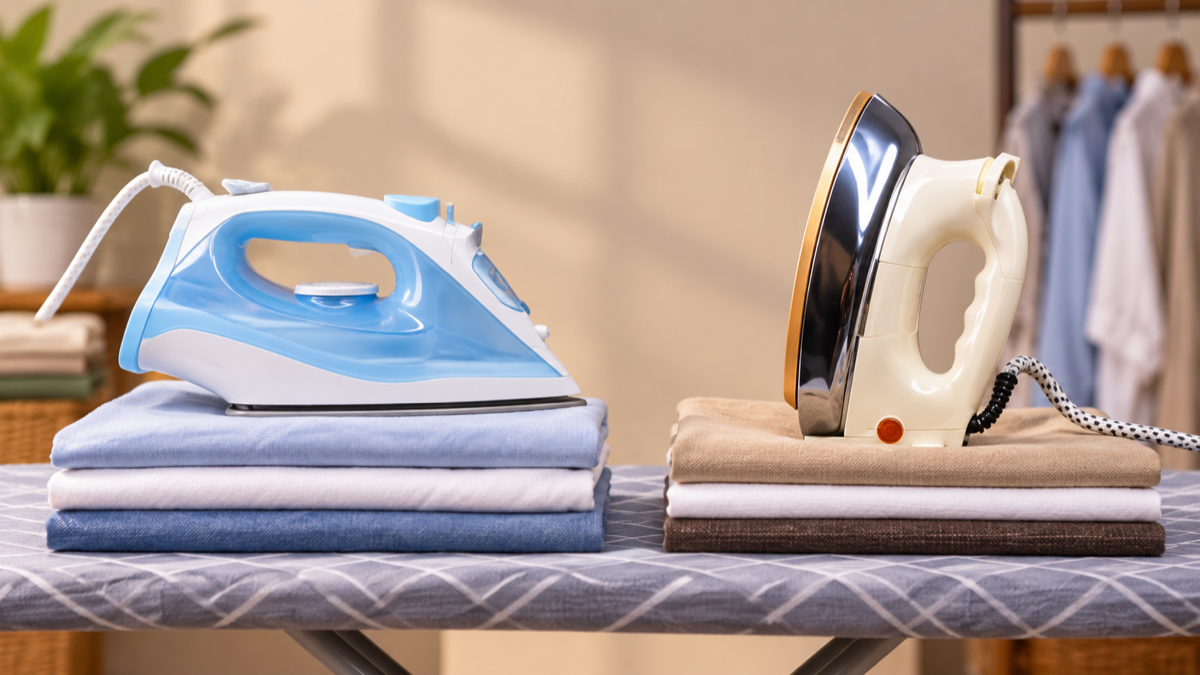
Walk into any home appliance store in Pakistan and you’ll face the same choice: dry iron or steam iron? The price difference ranges from Rs. 500 to Rs. 2,000+ depending on brand and features. But the right answer depends on your ironing habits, fabric types, and how much effort you want to put into clothes care. This guide explains the practical differences for Pakistani households.
| Factor | Steam Iron | Dry Iron |
|---|---|---|
| Price | Rs. 4,000–8,000+ | Rs. 1,500–4,000 |
| Wrinkle removal | Excellent — steam penetrates fibres | Good — requires more pressure/passes |
| Speed | Faster — steam relaxes creases quickly | Slower on stubborn creases |
| Delicate fabrics | Better — steam with lower temperature | Higher risk of scorching |
| Maintenance | Requires water + periodic descaling | Zero maintenance |
| Vertical steaming | Yes — de-wrinkle hanging clothes | No — fabric must be flat |
| Water quality requirement | Use filtered water to prevent clogging | None |
| Best for | Heavy cotton, linen, formal suits | Lawn, chiffon, polyester, quick ironing |
Steam works by relaxing the hydrogen bonds in fabric fibres that hold creases in place. When steam penetrates cotton or linen fibres, the wrinkle becomes temporarily pliable and the iron can easily smooth it flat. A dry iron achieves the same effect by applying heat and pressure, but requires more passes and more force — which can stretch and damage delicate weaves over time.
For Pakistani formal wear — men’s shalwar kameez in thick khaddar or kurta in cotton linen blends — steam makes a visible difference in the crispness of the final result. For women’s lawn and chiffon, a quality dry iron with good soleplate at appropriate temperature is equally effective and actually lower-risk (steam can cause water spots on chiffon).
Hard water (high mineral content) is common in Karachi, Lahore, and most Pakistani cities. In a steam iron, dissolved calcium and magnesium in tap water form scale deposits inside the steam generator and block steam holes over 2–4 months of regular use. Always use filtered or boiled-then-cooled water in steam irons. Descale every 3 months using a white vinegar and water solution flushed through the steam chamber.
Steam irons require consistent power to maintain temperature and steam pressure. During load shedding, a UPS typically doesn’t supply enough wattage for a 2000W+ steam iron. In homes with frequent load shedding, a good dry iron is more practical — it heats up quickly when power returns and doesn’t need to maintain water temperature.
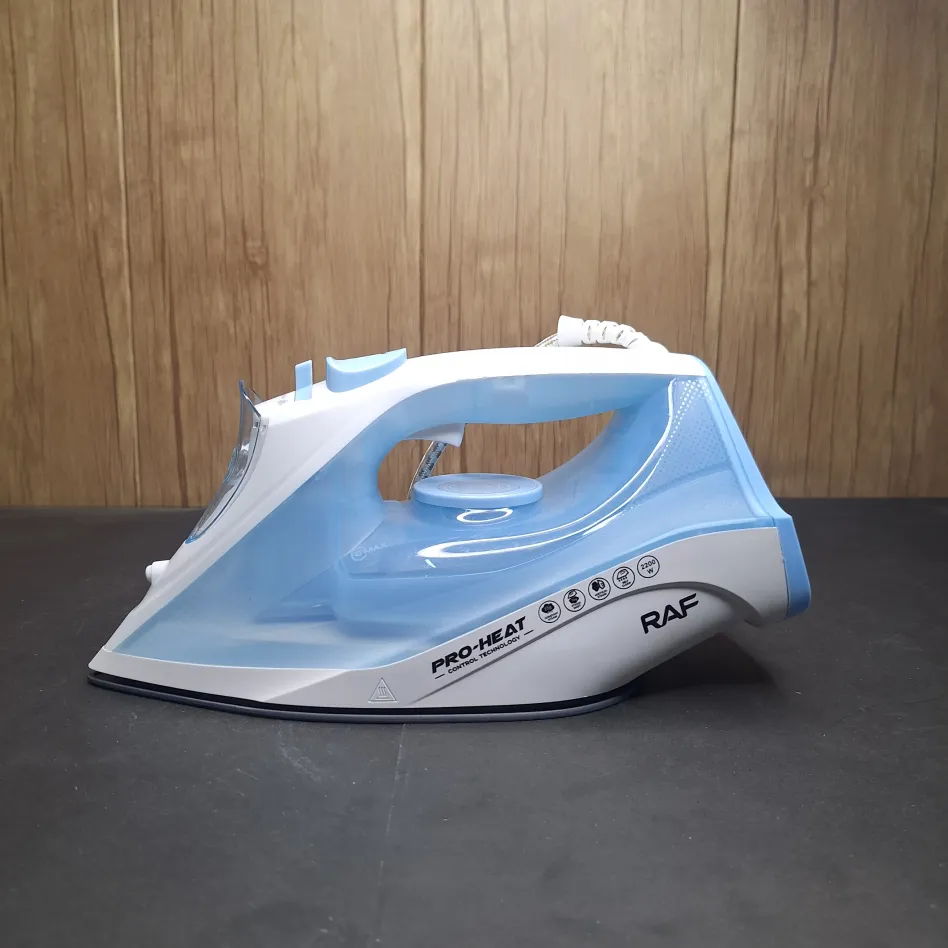
For families who iron formal wear (suits, dress shirts, kameez) regularly, the RAF Ceramic Steam Iron gives the best results. The ceramic soleplate + vertical steam combination is unmatched for wrinkle removal on hanging garments. View RAF Steam Iron →
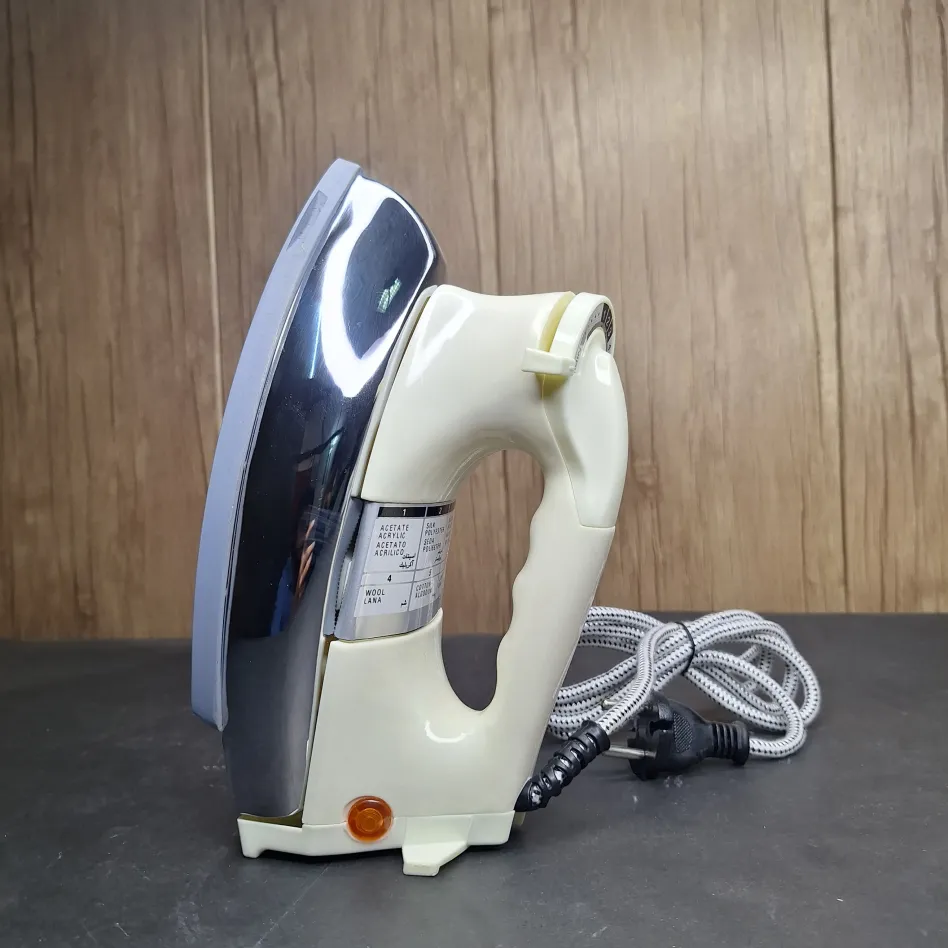
For households that iron lawn, chiffon, polyester, and synthetic fabrics — the most common fabrics in Pakistani everyday wear — a quality dry iron is faster, simpler, and lower maintenance. The Haier SI-2024 is our top dry iron recommendation. View Haier Dry Iron →
For heavy cotton, khaddar, and linen: steam iron produces clearly better results. For lawn, chiffon, polyester, and silk: a quality dry iron at correct temperature is equally effective and lower-risk (no water spots). Most Pakistani wardrobes are mixed — a steam iron at Rs. 6,000 handles both types, while a dry iron at Rs. 3,500 handles most cases adequately.
Yes — steam irons can be used without water (dry mode). Most steam irons have a dry/steam selector. This makes steam irons versatile: use steam for heavy fabrics, dry mode for delicate ones.
Mineral deposits in the steam holes cause brown water/rust spots. This happens with hard water and infrequent descaling. To prevent: use filtered water, and descale every 3 months with diluted white vinegar. To clean existing deposits: flush the steam chamber with vinegar solution and iron over an old cloth until the steam runs clear.
A typical electric iron uses 1,000–2,000W. At Pakistan's electricity rates, ironing 1 hour per day costs approximately Rs. 45–90 in electricity (at Rs. 45–50/kWh). Irons that reach operating temperature quickly and retain heat well (like ceramic soleplates) are more efficient because they spend less time reheating.
For white school shirt cotton: steam iron gives crisper results and removes collar and cuff creases more effectively. For polyester/synthetic uniform fabrics: dry iron at medium heat. For school use (daily, quick ironing): a good dry iron is more practical.
Browse all irons at Karkhanoo Markets Fashion & Beauty with nationwide delivery.